
What the draft order provides
On 26 October 2026, the ministry responsible for energy opened a public consultation on the removal of the BAR-TH-159 sheet. This standardised operation sheet funds, through energy savings certificates (CEE), the installation of an individual hybrid heat pump. The consultation ends on 16 November 2026.
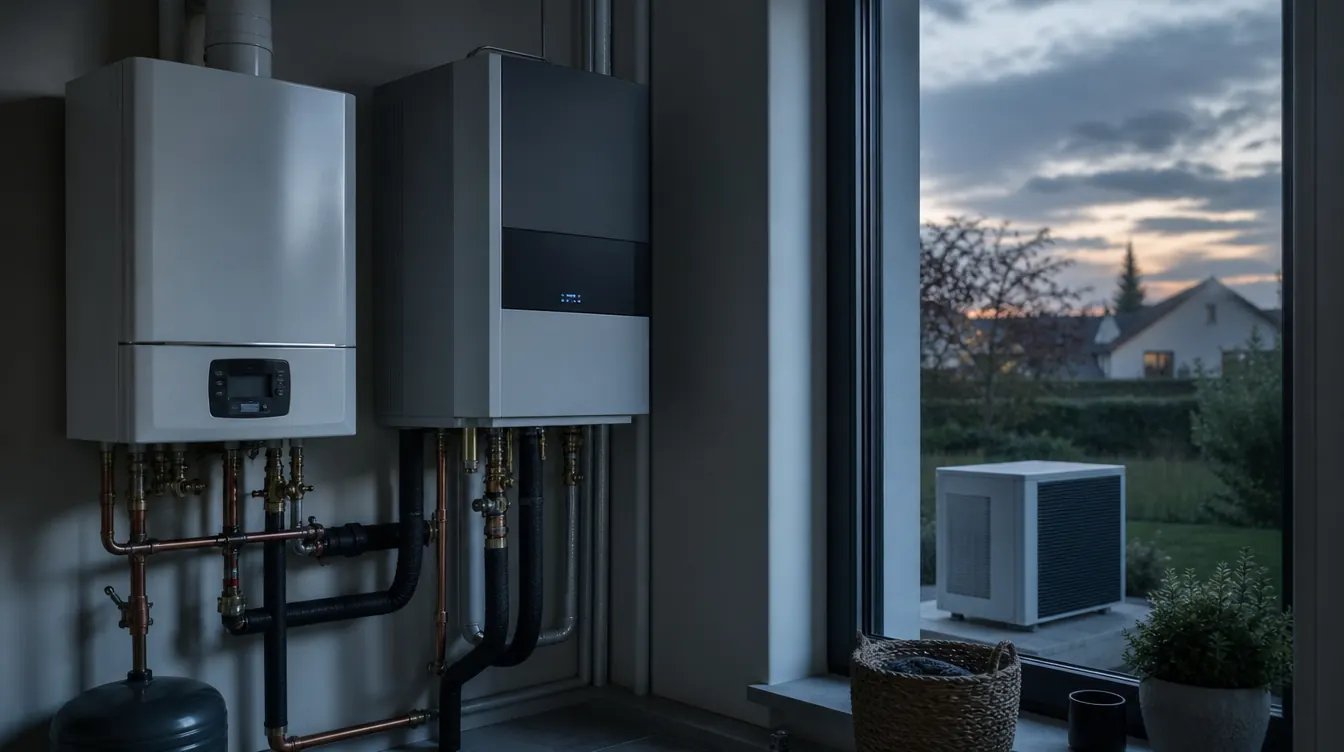
A hybrid heat pump combines an air-to-water heat pump with a back-up that burns a liquid or gaseous fuel, all driven by a single control system. The sheet covers existing residential buildings: houses and flats.
The draft order consists of three short articles:
- Article 1 removes the BAR-TH-159 sheet from the annex to the order of 22 December 2014, which brings together the catalogue of sheets.
- Article 2 organises the exit: the sheet, in its various versions, continues to apply to the operations listed in a document sent to the minister.
- Article 3 entrusts implementation to the directorate for climate, energy efficiency and air.
The order would come into force the day after its publication in the Journal officiel, France's Official Journal. Its date remains unknown: the draft leaves blank the opinion of the Conseil supérieur de l'énergie (the Higher Energy Council) and the dates of the consultation.
| Item | What the draft says |
|---|---|
| Sheet concerned | BAR-TH-159 (individual hybrid heat pump) |
| Public consultation | 26 October to 16 November 2026 |
| Entry into force | the day after publication in the Journal officiel |
| Operations already committed | eligible if listed within fifteen calendar days |
| List template | Tableau de recensement des engagements BAR-TH-159, drawn up by the DGEC (the French Directorate-General for Energy and Climate) |
A sheet already due to disappear
The current version of the sheet, BAR-TH-159 vA50-4, applicable since 1 April 2023, already provided for its repeal on 1 April 2028. The draft order therefore brings forward a deadline that professionals already knew.
The requirements of the sheet show the logic of the equipment. The seasonal energy efficiency of the heat pump with its back-up must reach at least 111%, within the meaning of Regulation (EU) No 813/2013. The coverage rate of the heat pump alone must reach at least 70% of the dwelling's annual heating needs. The fossil back-up can therefore cover the remainder, that is, up to 30% of needs.
The sheet also requires a sizing note, handed to the beneficiary when the works are completed. This note sets out the heat losses at the base temperature and the coverage rate. It is part of the supporting documents of the file.
Why the ministry is withdrawing this sheet
The consultation page gives three reasons, which we rephrase here.
Consistency with the decarbonisation of heating. The ministry wants to reduce gas consumption in buildings wherever possible. It cites energy sovereignty, household purchasing power and the gap between current natural gas consumption and the available biogas resource. It recalls that the CEE scheme has already stopped supporting the installation of gas boilers.
The weight of the fossil back-up. According to the ministry, the back-up of a hybrid heat pump can represent up to 30% of heating needs. The sheet would thus contribute, indirectly, to keeping fossil fuels in use. Its removal is meant to favour "100% electric" heat pumps.
European accounting. The savings linked to the BAR-TH-159 sheet can no longer be counted under Article 8 of the European Energy Efficiency Directive. This article sets Member States annual targets for cumulative energy savings among end consumers. It excludes, in particular, savings arising from measures that promote the direct combustion of fossil fuels.
Lastly, the text fits within the national low-carbon strategy (SNBC3). According to the consultation page, this strategy aims for a 50% cut in greenhouse gas emissions by 2030 and carbon neutrality in 2050.
This is the same reasoning as for the draft order withdrawing CEE sheets put out to consultation in September 2026. The European reason is identical: a sheet whose savings no longer count towards the Article 8 target loses its purpose in a scheme designed to meet that target.
The steps before entry into force
The draft order has no legal effect yet. Several steps must be completed before the BAR-TH-159 sheet disappears from the catalogue.
The public consultation. It is conducted under Article L. 123-19-1 of the Environment Code, which governs public participation in decisions affecting the environment. It runs until 16 November 2026. The final order refers to the observations made during this period.
The opinion of the Conseil supérieur de l'énergie. The draft mentions it in its recitals, with a date still blank. The opinion concerns the text as it emerges from the consultation.
Signature and publication. The order is made on the basis of Article R. 221-14 of the Energy Code. It will be signed by delegation of the minister, then published in the Journal officiel de la République française.
The day after publication. The sheet is removed and the fifteen-calendar-day inventory period starts to run. Any operation committed from that date no longer falls under the sheet.
Several weeks may pass between the end of the consultation and publication, and the draft sets no deadline. This uncertainty is what makes an inventory prepared in advance useful.
What it changes for you
For a homeowner or a landlord
A hybrid heat pump project under way must be dated precisely. An operation committed before the order is published may still earn CEE, provided the certificate applicant lists it. An operation committed after publication will no longer be able to do so under this sheet.
For a home where a heat pump alone is feasible, the draft clearly steers support towards that solution. The choice between the two remains a technical question, depending on the dwelling's heat losses and the existing emitters.
For an installer
The inventory period is short: fifteen calendar days after publication. Signed quotes and the commitment dates of each site must therefore be gathered before publication, not after.
Current commercial offers also deserve a second look. A CEE bonus advertised on a hybrid heat pump will no longer be due for an operation committed after entry into force.
For an obligated party or a delegate
It is for the certificate applicant to send the list to the minister, using the Tableau de recensement des engagements BAR-TH-159 template made available by the DGEC. An operation missing from this list no longer benefits from the provisions of the sheet. Collecting commitments from the network of partner installers should be prepared now.
For a manager of a multi-occupancy building
The draft targets only the BAR-TH-159 sheet, which concerns the individual heat pump. Collective heat pump operations fall under other sheets, which this text does not change. Our guide to sizing a collective heat pump sets out the requirements specific to these operations.
What we recommend
List the operations already committed. For each hybrid heat pump under way, note the commitment date and the document that proves it. This is the raw material of the inventory table, and the deadline leaves no margin.
Respond to the consultation if you are affected. An installer, a manufacturer or an obligated party relying on this sheet can submit observations until 16 November 2026.
Read the final text. A draft put out to consultation may change: inventory period, effective date, table template. We will update this article when it is published in the Journal officiel.
Our engineering office analyses each operation against the version of the sheet in force on its commitment date: that version decides eligibility. For how the scheme works as a whole, see our guide to energy savings certificates. To have a file reviewed, see our approach to CEE files or write to us.